
The EPS cushioning layer of the helmet is a key component inside the helmet, playing an important protective role when the head is impacted. It is through this YEMA helmet that we can protect our head, alleviate the impact force of the instant impact, and withstand critical fatal injuries. The following is detailed information about the helmet EPS cushioning layer:
Full name of EPS: EPS stands for Expanded Polystyrene, which is a lightweight foam material, usually used inside helmets.
Structure: EPS buffer layer is a layer of foam material inside the helmet, usually wrapped in the inner shell of the helmet. It has a dense cell structure, similar to foam plastic, but it will form many small bubbles through heating and expansion during helmet manufacturing, thus providing excellent energy absorption performance.
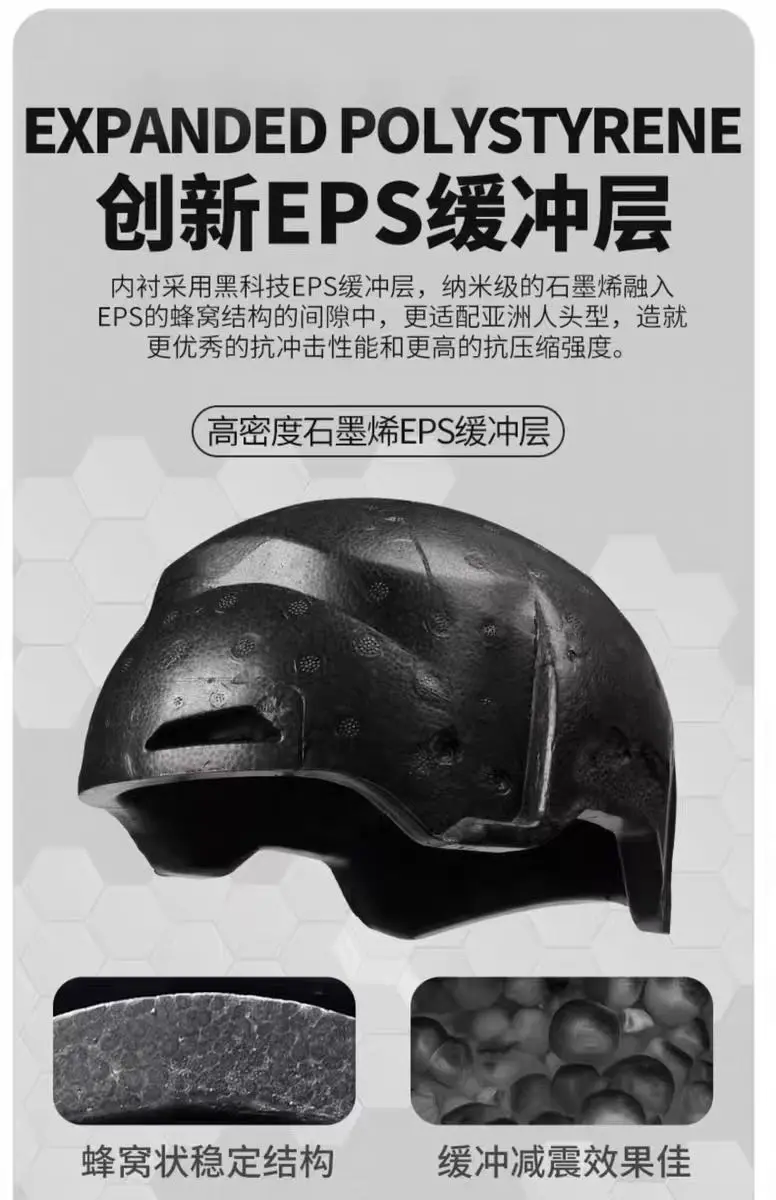
The main function of EPS buffer layer is to absorb impact force and reduce the risk of head injury. When the head is impacted, the EPS buffer layer will compress and deform, dispersing the impact force over a large area of the head and reducing the pressure on the head. This helps prevent concussion, skull fractures, and other serious injuries.
Disposable: EPS buffer layer is usually disposable because it can be damaged in the event of an impact. Even minor impacts can affect the EPS cushioning layer inside the helmet, so once the YEMA helmet experiences a significant impact, it should be replaced.
Multi layer design: Some helmets adopt a multi-layer EPS design, which means they have multiple layers of EPS cushioning layers inside, each with different densities, to provide higher levels of impact absorption and safety.
Quality control: The quality control of EPS buffer layer is crucial for the performance of helmets. YEMA helmets ensure high density and uniform expansion of EPS material to ensure consistent protective performance.
Maintenance: To maintain the performance of the helmet, avoid exposing it to high temperatures or sunlight, as the EPS material may be damaged as a result. Regularly inspect the helmet for any obvious damage or cracks, and ensure that the EPS cushioning layer inside the helmet is intact and undamaged.
In summary, the EPS cushioning layer of the helmet is a critical safety component that protects the head from impact injuries through an energy absorbing mechanism. Therefore, purchasing and correctly wearing high-quality helmets is crucial for head safety. If the helmet is damaged after an accident or impact, it should be replaced immediately as the damaged EPS cushioning layer can no longer provide sufficient protection.


